Saturday, August 26, 2017

Saving Things


Brian Christianson Photography, Taken from Mt. Sentinel in Missoula, 8/17/17
Saturday, July 15th at around 2:35 p.m. lightning sparked a fire about 10 miles southwest of Lolo, Montana. The fire burned at above 7,000 feet where the terrain was sparse, rugged and alpine in nature. My husband and I made note of the thin spiral of blue smoke from our front porch in Missoula , MT, twenty miles away. We find out later, from a friend, that it's a small wild fire, probably not a big deal. It's deep in the wilderness, too steep and inaccessible for the fire fighters to tackle so it's a wait and watch situation. The fire is mildly annoying to all of us. It means smoke in the valleys when the wind blows in a certain direction. It obscures our views, stings the eyes, makes outdoor recreation hard on the lungs, but we aren't too worried. We'd been lulled into security by the record snow pack in the mountains last winter. There had been plenty of moisture, we thought no fire would really take hold.

Fast forward to August 15th, 2017 when many in the Bitterroot Valley, many friends, students, and fellow staff members from my school got a knock on their door at 10:30 p.m. It's a mandatory evacuation. A hand of fire, as my friend and fellow teacher, Leanne, described it, was reaching over the mountain ridge and making a run towards the valley and houses below. Leanne, her family, and around 400 other families in homes in the area, had a matter of minutes to grab what they could and get out. What did Leanne grab? It was one of the first questions I asked her, and she seemed rather surprised by her own answer. She took some clothes, her children's baby books, her dogs, and her flute. It's amazing what really matters when it comes down to it, and how little we really need. Most other staff members, parents of students, and students mentioned grabbing similar items: a few pieces of clothing, pets, and photographs.

August 17th, the Lolo Peak fire explodes. A massive smoke plume rises up. This is the view from my front door in the Missoula Valley.

The idea of only being able to save a select number of objects reminded me of a Saving Things Poem I have done in my classroom. These poems center around the idea of saving things. There have been several different mindsets that my students have gone into when writing these poems. The first idea was really about objects that are special to us, and what students would save if they could only choose a few, select items. However, as we wrote these poems in class, it quickly became obvious that the things students want to save wasn't objects or things, but memories, family, friends, and pieces of nature.

 The scope of the poems evolved into saving things that were more intangible. I had one student tell me that he thought about the idea of the world being destroyed, and what he would most want to save when he wrote his poem. A 4th grade girl wanted to know if it was alright if she saved one of each of the five senses in her poem. Since I felt like both these ideas were more powerful and creative than the original premise of the poem, I encouraged them all. Let's be honest, this is the moment all teachers really strive towards when students take an idea and make it their own. It's when the spark of creativity takes hold and comes to life.

What I Would Save
By: Cyrra, 4th grade

I would save the smell of my father's spearmint tea,
and the taste of my mother's homemade, raspberry cheesecake.
The smell of purple lilacs on the tall, green bush in my backyard.
The sight of the sunset over the mountain tops: red, orange, blue, pink, gray and purple.
The feeling of my cat, Minki's, soft, smooth fur.

The sound of the bird singing outside of my window.
The feeling of the wind against my cold cheeks.
The feeling of teardrops dripping down my face when I am sad.
The smell of soft, silky hair that's just been washed.

The taste of cold water going down my throat.
The sound of a beautiful, tall waterfall running down rough rocks.
That is what I would save.
What about you?

I have always been fascinated by the idea of preserving things physically that cannot really be contained. I love the magical idea of keeping something like ocean wind, or a mother's lullaby in a mason jar. Since I was a child, I was captivated by the way the BFG captured children's dreams and nightmares with his net in the novel The Big Friendly Giant by Roald Dahl. Grandma Dollop in the book Savvy by Ingrid Law saves special songs like wedding songs in jars that can be listened to at any time if the lid is slightly unscrewed. Now when I introduce the Saving Things Poem to my classes the sky is the limit, anything and everything is encouraged to be saved.

Saving Things
By: Desi, 5th grade

I want to save fluffy, pink clouds from the sunset in Alaska
in a clear, glass jar.
I would save the sight of fog in the early morning.
I would save the fresh smell of my mother in the pine-filled forest.
Maybe the feeling of my not-to-fluffy cat's fur against my cheek.
I would save my mother's voice so happy and cheerful with a mind of it's own.
I want to remember the taste of a tomato fresh from our summer garden.


The Lolo Peak fire is still being courageously fought in Montana. Precious, irreplaceable things, and people have been lost: two houses, and a fire fighter's life. There are still many people who have been unable to return to their homes. Writing a Saving Things Poem won't really save anything, but it can provide an outlet to reflect on what is truly important in our lives, and all of the things that we should and can be grateful for.

I'm going to end this post with a poem written by a former student of mine, Derek, when he was in 6th grade. Derek was a bright, energetic, intelligent and creative student. He always had a smile on his face, and his humor and wit cracked me and his fellow classmates up on a daily basis. Sadly, when he was only nineteen years old he was killed in a car accident. After hearing the devastating news, one of the first things I took solace in was Derek's poetry. I was so grateful that I had saved many of his poems. The following is the first poem I found of his. I still read it often, share it with my classes, and am astounded by its wisdom. It reminds me that we all need to appreciate the many wonderful things, people, and experiences we have in our lives right now, because in the blink of an eye they can be gone.

Saving
By: Derek, 6th grade
If the world was to go,
I would sift through all
the bitter hate and pain
and watch it float away.


I would keep all of the love
and all the true joy.
I would save what is clear
and let go of what is unpure.


I would save dreams
silently slinking through the night.
If I could, I would save
the whole world.
But then again,
only one has that power.

Saturday, August 19, 2017

List Poems

Things that are Dusty. Karli, 6th grade


I think either you are a list person, or you are not. My husband loves lists. He wakes up, makes a list of things he is going to do that day, and then happily crosses off each task as he accomplishes them. He loves lists so much that I have even seen him do something which was not on the list, like mowing the lawn, and then go back to his list, write the task on the list, and then cross it off. If that sounds as weird to you as it does to me, then you are probably not a list person. I have spoken to other list makers and most admitted to doing the same thing as my husband. I guess it's the thrill of crossing something off of the list that excites them. It's the written proof of what one has accomplished during the day.

I am not a list person. My husband tried to make me a list person when we were first married. My problem with lists is that I don't ever think about making them, I lose them, and according to my husband I don't make logical lists. Yes, he has rewritten my grocery lists because I usually list things that we need in each separate recipe. He makes grocery lists by the department in the grocery store. All dairy products will be found in the same part of my husband's list, all the produce items in another. Needless to say after having a few of my lists rewritten, I stopped making lists altogether.

In poetry, however, I do like making lists. Maybe it's because I get to take something, which for me personally is rather boring, and try to rework it into something creative and interesting. Maybe it's because poem lists can be totally imaginary, humorous, or just notice tiny details in life and make them beautiful in their accounting. Whatever the reason, whenever I plan a poetry unit List Poems are at the top of my list.
Things That Are Squishy C:\Documents and Settings\KiffeS\Local Settings\Temporary Internet Files\Content.IE5\7WZNDXLT\MCj04345690000[1].wmf

The top of a jellyfish where you don’t get zapped
A latex ball when it’s in your hands
A piece of gum when it’s already been chewed
A sponge when you feel it
A marshmallow over the fire on a cold day
The comforter on a chair
Stuffed animals when you hold them
A puddle of mud when you step in it

Makayla, 6th grade

When we talk about List Poems in class, we first discuss the different reasons people usually make lists: groceries, chores, things to do, bucket lists. We list ingredients in recipes, we list the directions of a science experiment, we list homework assignments, dates we want to remember, and celebrations. Some of my students are natural list makers, but even those who are not usually like writing List Poems.

In poetry it is fun to make lists that account for little details in our lives like: Things that are Beautiful, or Things that Make Me Happy. Students have come up with incredibly creative lists that I never would have thought of like: Things that are Dusty, or Things that are Sharp. Little brothers and sisters usually get quite a bit of focus on lists like, Things that are Annoying, or Things that Make Me Mad.

Things That Are Round C:\Documents and Settings\KiffeS\Local Settings\Temporary Internet Files\Content.IE5\WFCAEE5E\MCj04363170000[1].png

Bubble of soap flying right out of the bathtub
Sumo wrestlers, pale, round orbs
The blazing sun burning our skin
The world turning, twisting, and whirling
A sombrero on Cinco de Mayo
A squished piece of gum on the sidewalk
A tropical coconut hanging from a tree
The rings to your binder pinching your fingers

Carl, 6th grade


My only requirements for students on List Poems is that they do not write an ordinary list for groceries, or chores, and that the lists have at least five items included in them. I always encourage thinking about the images and messages we create when we write, and last for the students to be creative and have fun. Whether you are a list person or not, give a List Poem a try. You might be surprised by how creative and interesting a list can be.


Meteor - Free images on Pixabay


Things that are Destructive
Chance, 6th Grade

A rifle locked and ready to fire
A group of scientists producing the next state-of-the-art weapon
A ticking sound next to your feet
The next World War
A meteor crashing at high velocity into an innocent planet
A black hole sucking all light out of space
A fist, angry and full of hate
A hurricane destroying entire cities

Friday, August 4, 2017

Color Poems

Google Slide by Myla and Sarah, 6th grade

What's your favorite color? It's one of the first questions we ask when we are getting to know someone. At least it's a question we often ask when we're young. It helps us figure out who someone else is, and by contrast or commonality, who we are. Sometimes it's a question my 5-year-old asks me 3 to 4 times a day. Color is important and personal. We are both enchanted by it, and identify with it. For most of us color atuomatically evokes emotion. We are tickled pink when something pleases us. We feel a gray cloud wash over us when we are down. We are green with envy. We feel white hot anger, or see red when we are upset.

Color inspires pride. Did you know that in the 17th century the Dutch actually cultivated white carrots to be orange in honor of William the Orange? Today people paint their faces and wear school, team or national colors to show support and unity.

Blue by Daniela, Charlie and Madalyn, 6th Grade

Blue


Blue is the feeling of misty ocean breeze and the soft petals of forget me nots.

Blue is the taste of a freshly baked blueberry muffin.

Blue is the sound of seals barking in the deep, blue bay.
Blue is the sight of a giant whale soaring through the sky, and a little baby following behind.
Blue is the smell of freshly steeped blueberry tea.
Blue is the taste of a dense fog rolling into the shore and the taste of freshly fallen rain water.
Blue is the sound of water splashes while the silent heron snatches a fish.

Daniela, Madlyn, Charlie

Color also changes our mood. Red and yellow are supposed to increase appetite. Think about all the popular food chains that use red and yellow for their logos. The color blue gives the impression of authority and trustworthiness. Knowing this, it makes sense that police officers and doctors don blue scrubs or uniforms. Color also sends a message to others. We stop on red. We have a green thumb if we are good at growing plants. We wave a white flag when we've given up.

Because of its strong emotional appeal color is an easy subject for students to write about and discuss. Usually on the first Friday of a new school year, I have my students write a group color poem. First, we discuss color meaning,  why our favorite colors are favorites, and what we associate with certain colors.

Then I share the poem "What is Brown?" by Mary O'Neil. It is from her beautiful poetry book  Hailstones and Halibut Bones. I ask my students to close their eyes while I read so they can hear the images that stand out to them. When I finish reading, the students share with me the images from the poem that painted the best pictures in their minds.

What is Brown?
By: Mary O'Neil

Brown is the color of a country road,
back of a turtle, back of a toad.
Brown is cinnamon and morning toast
and the good smell of the Sunday roast.
Brown is the color of work and the sound of a river,
Brown is bronze and a bow and a quiver.
Brown is the house on the edge of town
where the wind is tearing the shingles down.
Brown is a freckle, Brown is a mole.
Brown is the Earth when you dig a hold.
Brown is the hair on many a head.
Brown is chocolate and gingerbread.
Brown is a feeling you get inside
when wondering makes your mind grow wide.
Brown is a leather shoe and a good glove--
Brown is as comfortable as love.

Mary O'Neil writes about almost every color you can think of in Hailstones and Halibut Bones, but I always share brown. There are a couple of reasons why. One, most students don't graviate towards brown when picking their color to write about. Two, I love how gorgeous her interpretation of the color is in her poem. Thinking of brown being, "as comfortable as love" and "the feeling you get inside when wondering makes your mind grow wide" is a new perspective, at least to me, on the color. It would be easy to only think of the color brown as things that are actually brown, but a poem where brown is only dirt, mud, and the color of wood would probably be pretty boring, and wouldn't really do the color justice. This is what I love about writing and poetry. This is where the catalyst for the color poems really takes flight.
White by Chris, 6th Grade

I tell students that one of my favorite things about poetry is the opportunity to look at the world in a new way. Writing color poems gives students a chance to look at colors in a new way. The students will give their colors the five senses: a taste, a sound, a sight, a feeling, and a smell. They can also give their colors movement. If the color yellow moved how would it move? Would it be a flurry of canary feathers? A spark of lightning zipping across the sky? The notes of a lullaby wafting down on a sleeping baby? The fun thing is, there is no real answer. You can't tell someone that yellow doesn't sound like the thud of your toe being stubbed. Everyone interprets, and is allowed to see, yellow in her own way.

I've done the group color poems in several different ways. First, I divide the students into groups of two or three. You can divide students any way you want. At the beginning of the year, I usually pull sticks. Then I have the students pick their color. It doesn't matter if more than one group chooses the same color because the ideas will always be unique. I pass out colored markers and big pieces of butcher block paper and have the students start brainstorming and writing.
Pink, Maya, 6th Grade

If you just want to have them do an easy Friday activity, then have them write the poems and present them in a group at the end of the period. I like for the students to draw a simple picture next to each line, and if we have extra time, make up a movement to perform with each image. If green flies like a parrot through the Amazon Rainforest then the students can start flapping their "wings". It gets them moving and laughing, especially if I act out a couple of silly lines of my own first.

If you want to extend the activity, have your students create a poster of their color poem with carefully drawn illustrations and writing. Or if you want to add a tech element, have the class create a Google Slide Show with all of the poems on separate slides. Then the class can come up and present their poem as you move through the slide show. If you add the slide show to Seesaw the students could add an audio recording of their poem.
Colors by Angelica, 6th grade
Whatever your favorite color is, you probably have an opinion on how that color makes you feel, and images that come to mind whenever you think of it. If you are looking for a fun, collaborative, and interactive poem to try during your first week back at school, or any time for that matter, give a color poem a shot. It might make you and your students see color in a completely new light.

Color Poem Activities and Directions
Example of Color Google Slide Presentation

Monday, July 24, 2017

Imitate to Create: Exploring Voice and Style


Charles Caleb Colton once said that "Imitation is the finest form of flattery." Yet, imitation is so much more than flattery in education. For human beings imitation is often how we learn. In writing, imitation can help a writer understand an author's voice, cadence, the texture of her words, and the structure of the her sentences or lines. Writing in another writer's style also helps a writer learn about his/her own style, and how it differs.

I love to try and imitate William Carlos Williams clean and precise voice. He never wastes a word, and creates amazingly bright and vivid imagery using literal images.  My own writing, in comparison, leans towards the figurative. I like to use metaphors and similes, and I am much, much more wordy. It is a difficult and fun challenge to try and write like William Carlos Williams. There are many poetry lessons that work with imitating William Carlos Williams. I originally found my inspiration for this lesson from Sheryl Noethe's poetry book, Poetry Everywhere, however there are lots of examples of these type of imitations on the Internet if you do a little searching. In my experience, his best poems for students to imitate are "The Red Wheelbarrow" and "This Is Just To Say". 

Thursday, July 20, 2017

The Fib: Poetry, Science, and Magnificent Math Patterns


Sometimes we limit ourselves by defining our own identities. I hear it all the time from friends and family, students and teachers. Math isn't my subject, or I'm not a reader, or I wish I could write poetry, but I teach math or science. We create boxes around ourselves and our subjects, and therefore invent limitations that don't really exist.

I'll admit that I have definitely been guilty of this way of thinking. I taught 6th grade Language Arts for 10 years. When I taught English and reading, I might have been the go-to-person for proof reading a story, or thinking of a creative topic for a persuasive writing essay, but nobody was banging down my door to ask me how to solve an equation, or plot a coordinates on a graph. However, in the real world, math, science, social studies, writing and reading aren't solitary subjects. For those of us who dare to venture out of our subject areas, Fibonacci Poems are a great and easy way to incorporate writing into a math class, or pull science into English. Fibonacci Poems are simple to learn, and a fun form for students to play.

1,1,2,3,5,8,13,21...The Fibonacci Sequence appears in math, science, nature, and in 2006 a social media blog spiraled the sequence into the poetry world as a 6 line, 20 syllable poem called the Fib. Gregory K. Pincus had no idea what he was starting when he posted a short poem on April 20, 2006. Pincus was playing around with haiku poems, and syllables, when he thought of using the Fibonacci Sequence as the syllable count in his poem. He posted his poem on his blog, and six days later had 32,000 visitors to his blog site and people around the world were creating, posting, and playing with this "new" and fun form of poetry.


What is the Fibonacci Sequence?

The Fibonacci Sequence is a series of numbers 1,1,2,3,5,8,13,21,34...the next number is found by adding the two previous numbers together. 1+1=2, 1+2=3, 2+3=5, 3+5=8 and so on. Leonardo Pisano Bollono, an Italian mathematician, nicknamed Fibonacci, is credited with spreading the idea of the sequence, although it was known about in India for hundreds of years.

When squares are made in the width of the Fibonacci Sequence it creates a nice spiral that we see in nautilus shells, pine cones, flowers, animals, and even galaxies.


Here are the links of a couple You Tube videos that my students have enjoyed about the Fibonacci Sequence. The first one explains different places the sequence is found in nature. The Fibonacci Sequence in Nature. The second is called Doodling in Math, Fibonacci, and Being a Plant. It evolves from doodling spirals in math class, to a look at the Fibonacci Sequence and how it intertwines with math and nature. It is fast-paced and interesting, and usually produces weeks of spiral doodles from my students.


What is a Fibonacci Poem?

A Fibonacci Poem is a poem that uses the Fibonacci Sequence to determine the number of words or syllables contained in each line of poetry. When I taught 8th grade I used syllable count, but I found that word count is easier for 3rd-6th grade. There are several versions of the Fibonacci Poem, but I only teach my students three forms.  The first type of fib is called the Simple Fib. It builds from 1 word up to 8 words. It can either be shaped like steps, or a pyramid.

Simple Fib                                                                                           Simple Fib
1    Leaves                                                                                               Moths
1    falling                                                                                                flying
2    down like                                                                                      gently through
3    floating, fall balloons                                                                  the meadow fields
5    so many colors to choose                                                      flying fast through the wind
8    but you may pick only one special leaf                    feeling free, gliding in the midnight breeze

        -Kayla 6th grade                                                                      -Alexis, 6th grade

The Diamond Fib uses the Fibonacci Sequence up to the number 5, and then reverses the numbers back down to one: 1,1,2,3,5,3,2,1,1. The result is a poem that is shaped like a diamond.

Diamond Fib, created in Google Drawing by Finley, 3rd grade

Finally, I teach the Butterfly Fib. This poem starts out the sequence with 5 words, and then narrows to 3, 2, 1. Then the pattern reverses the sequence back to 1,2,3, and ends with 5. The pattern, if looked at from the side, looks like a butterfly. 5, 3,2,1,1,2,3,5

Butterfly Fib:

Lightning

Lightning is frightening like dragons
it travels fast
super fast
zig
zag
across the
black night sky
Lightning is frightening like dragons

-Josh, 3rd grade


For some students, the Fibonacci Sequence just clicks as their form of poetry. I normally ask the students to try out at least two forms of the Fib, but I often have a few students who come back the next day with pages and pages of Fib Poems. They love playing with the pattern and the number sequence. They create new patterns and shapes with their words. The Fib is a playful and simple way for all of us to incorporate math, science, and writing together.

Fibonacci Poem Explanation, Examples, and Activity Ideas


Saturday, July 8, 2017

Make Some Noise with Onomatopoeia!


Onomatopoeia Super Hero Comic created using Google Drawing.

Slurp, bang, thud, boom, pow, crunch, sizzle, splat, ka-boom!!! Onomatopoeia words are full of action, silliness, texture, and fun. Onomatopoeia is defined as a poetic structure of words used to convey sounds. However, when I teach the concept to my students I simply explain that onomatopoeia is a sound word.

Onomatopoeia words add flavor and excitement to our writing. They are a wonderful way to hook a reader into our writing, and to lift the words off of the page and into our imaginations. What would you rather read about, lightning flashing across the sky, or lightning crackling across the sky? Bacon frying, or bacon sizzling and popping in the pan? Books falling to the floor, or books falling to floor with a thud? I know which I would choose. I'm a sucker for onomatopoeia every time, and so are my students once I teach them about onomatopoeia.

Onomatopoeia words are all around us. They are sounds in nature like leaves rustling, a stream gurgling, or thunder booming. They are the sounds of eating and drinking like the slurp of a spaghetti noodle, the fizz of soda pop, and the crunch of a potato chip. They are the sounds that animals make like the moo of a cow, the chirp of a bird, or the roar of a lion. Did you know that different languages use different onomatopoeia sounds for animals? In Spanish a rooster says quiquiriquí instead of cock-a-doodle-doo, a bird says pío instead of tweet, and a frog says croá, croá instead of croak.

Onomatopoeia words always make me think of action. Perhaps this is why they are used so frequently in comic books. Fight scenes are peppered with pows, zaps, and boings. When I introduce onomatopoeia, I like to have the students brainstorm onomatopoeia words and include an action with them for the rest of the class to imitate. A kick becomes a ka-pow, a wrist and hand flick a slap, and holding one's noise and keeling forward an achoo! The activity gets us all moving, being silly, and having fun with onomatopoeia.


A hilarious book to read to students while noticing onomatopoeia words is the picture book The Story of the Little Mole Who Went in Search of Whodunit by Werner Holzwarth and Wolf Erlbruch. The book, which combines mystery, onomatopoeia words, and bathroom humor is sure to make students and adults (me) giggle. The story is about a little mole who wakes up one morning, pops out of his hole only to have some animal do his business (poop) on his head. Since, the mole is near-sighted and can't see who the perpetrator is, the rest of the book involves him interviewing a variety of animals to figure out who is the culprit of his unfortunate incident. Each animal explains what his business looks like, and the author includes an interesting array of onomatopoeia sounds to describe it as well.  The rabbit's business flies out with a rat-a-tat-tat, the goat with a plippety plop, and the cow with a kerplosh. 


The Little Mole Who Went in Search of Whodunit by Werner Holzwarth and Wolf Erlbruch.

Yes, it's gross and a bit juvenile, but I guarantee it will capture your students' attention. I have students listen with a notebook in hand to write down their favorite onomatopoeia words from the book. They love repeating the various sounds, and getting all of us to cry out, "Ewwww, and disgusting," all over again. If you are uncomfortable reading this type of book aloud to your students, or can't get a hold of the book, there are several read aloud versions on YouTube. Here is the link to the read aloud version of the book. There are also many other books that illustrate onomatopoeia in perhaps a less potty humor form: Mr. Brown Can Moo! Can You? by Dr. Seuss, Thunder Cake by Patricia Polacco, Owl Moon by Jane Yolen, and Click, Clack, Moo: Cows that Type by Doreen Cronin and Betsy Lewin.

There are lots of activities that students can do to practice, write, identify, and play with onomatopoeia.
Students can create their own Super Hero Comic in Google Drawing, Slides, or Seesaw. Then students can add speech bubbles, and call outs to highlight the onomatopoeia words being shown. They can take pictures of each other to make themselves the super heroes, find images, or even draw their own.


A challenging activity my students also enjoy tackling is to write a poem about an activity using only onomatopoeia words. Students should only mention their chosen activity in the title, and not read the title when they are sharing with the class. Afterward, the class can guess what activity the poem is about by listening to the onomatopoeia words. My students have had lots of fun trying to identify whether their classmates are writing about football, soccer, rodeo, skiing, or even cooking.

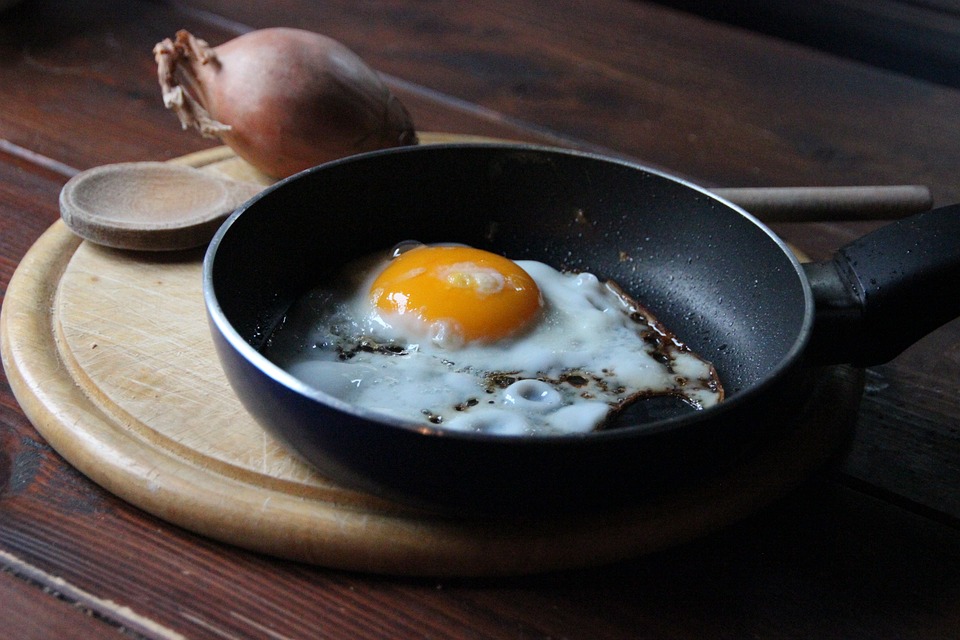
Early Morning, Making Fried Eggs
By: Casey, 6th grade

Yawn
Stretch, stretch
Yawn
Brrrrr!
Step, step, creak, creak
Clank
Whisk
Crack
Plop
Hiss
Sizzle, Sizzle
Flip
Scoop
Splat
Click, click
Om, om, om
Yummmm!!!!

Free photo Fry Fried Yolk Breakfast Egg Frying Pan - Max Pixel

Onomatopoeia is a lively way to add pop, sizzle, and pow to our writing. Like the words itself, onomatopoeia allows our students to get moving, get active, and make some noise in their writing.

Valentine Hyperbole Poems

Love amplifies everything in our lives. It slows down time. It makes our hearts pound in our chests. It takes our breath away. That is w...